

An online reference for researchers
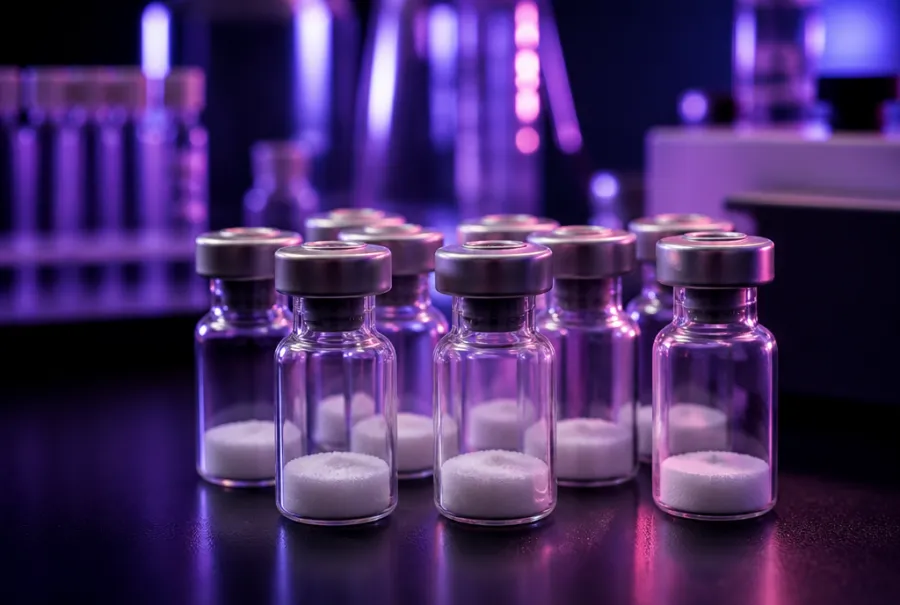
Research peptides are central to work in biochemistry, cell biology and analytical science. These guides cover the compounds themselves — how they are made, verified, named, stored and handled in the laboratory.
Research use only — not for human use
 01
01Research Peptide Fundamentals
What research peptides are, how they differ from proteins, and what “research grade” actually means.
Read guide → 02
02How Research Peptides Are Synthesized
Solid-phase peptide synthesis, step by step: resin, coupling cycles, cleavage, and why synthesis quality matters.
Read guide → 03
03Purification & HPLC
How reversed-phase HPLC separates the target sequence from synthesis by-products, and what a purity percentage means.
Read guide → 04
04Quality Control & Certificates of Analysis
HPLC purity, mass-spec identity, and how to actually read a certificate of analysis.
Read guide →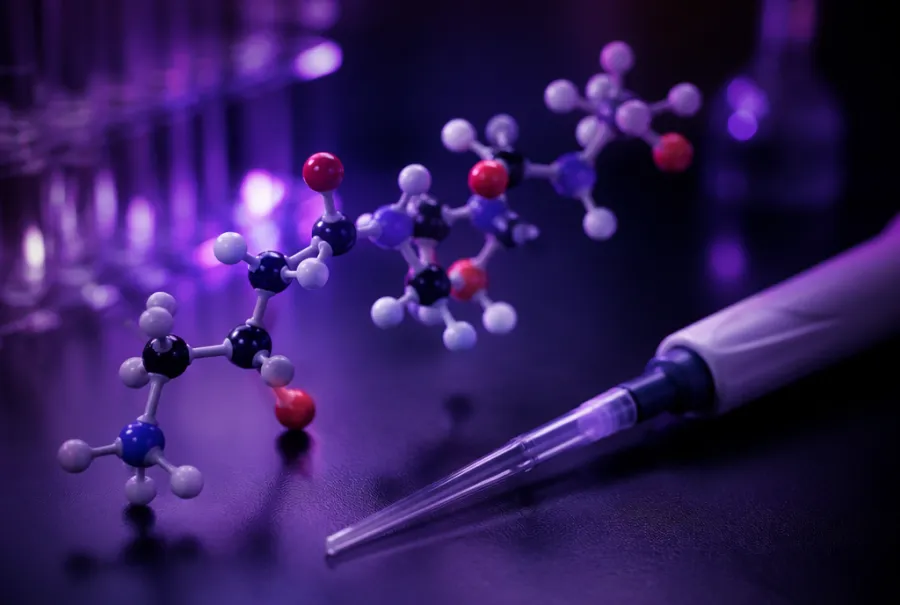 05
05Peptide Modifications
Acetylation, amidation, PEGylation, cyclization — how chemical modifications change a peptide's behavior in the lab.
Read guide → 06
06Stability & Storage
Lyophilized versus in-solution stability, temperature ranges, and laboratory handling that preserves a reference standard.
Read guide → 07
07Peptide Nomenclature
Why one compound has three names, how sequences are written, and what salt forms mean on a label.
Read guide → 08
08Research Glossary
The laboratory terms used across this catalog and its documentation, defined in one place.
Read guide →Batch purity & COAs
Every NEXTGEN lot is third-party tested. Review the current certificates of analysis for the compounds in the catalog.
Research compounds
Browse the full catalog of research peptides — each listing states net content, purity specification and lot documentation.
RESEARCH USE ONLY — NOT FOR HUMAN CONSUMPTION. Products are laboratory reagents for in-vitro research by qualified professionals. Sale for human use is strictly prohibited. Nothing in these guides is medical advice, dosing guidance, or a representation of safety or efficacy in humans.